2026 Best Poultry Nutrition Strategies for Optimal Growth and Health?
In the realm of poultry nutrition, finding the right balance for optimal growth and health is crucial. Dr. James McGlone, a leading expert in the field, once stated, "The right feed not only fuels growth but also lays the foundation for overall health." This belief underscores the importance of nutrition in poultry farming.
Every year, poultry producers face challenges. Feed availability, cost, and quality play significant roles. Many overlook how minor adjustments can lead to improvements in health and productivity. A well-formulated diet is not just about nutrients; it's about creating a sustainable environment for growth.
The strategies for 2026 must embrace innovation while considering traditional methods. Exploring natural feed additives or alternative protein sources could be key. However, it's essential to avoid a one-size-fits-all approach. Each farm is unique, and reflecting on individual needs is vital. Only then can we achieve the best outcomes in poultry nutrition.
Poultry Nutritional Requirements for Optimal Growth and Health
Poultry nutritional requirements are critical for optimal growth and health. According to a report from the American Poultry Association, a balanced diet must provide essential nutrients, including proteins, vitamins, and minerals. These nutrients support the immune system and enhance meat and egg production. Research indicates that protein sources should ideally contain 18-20% crude protein content for chicks.
Micronutrients play a significant role too. For example, calcium is essential for bone development and eggshell quality. A study published in Poultry Science suggests that a calcium level of 4-5% in the diet reduces the risk of bone fractures in laying hens. However, many producers overlook the importance of proper mineral balance. An imbalance can lead to health issues, affecting overall productivity.
Feed conversion ratios are also vital. Optimal feed conversion improves growth rates. Data indicates that when birds are fed a diet with appropriate energy levels, the feed conversion ratio can improve by 10%. Yet, many operators fail to adjust the nutrient composition based on growth stages. This oversight can lead to growth stagnation and increased costs. Understanding these nutritional needs is essential for success in poultry nutrition.
Key Ingredients in Poultry Diets: Macronutrients and Micronutrients
When formulating diets for poultry, understanding macronutrients is crucial. Protein, carbohydrates, and fats are fundamental components. Proteins aid in muscle development. Birds require amino acids for growth and maintenance. Carbohydrates provide energy for daily activities. Fats supply essential fatty acids, improving energy density. Ignoring the balance of these nutrients may lead to suboptimal growth.
Micronutrients, although needed in smaller amounts, are equally vital. Vitamins and minerals play key roles in metabolic pathways. For instance, vitamin A is essential for vision and immune health. Calcium and phosphorus are necessary for strong bones. A deficiency could result in health issues, like weak bones or poor egg production. It's critical to assess the specific needs of different poultry types.
However, while formulating these diets, it's easy to overlook individual bird requirements. Some may not thrive on standard applications. Regular monitoring is necessary to adjust feeding strategies. Reflecting on each batch's growth performance can lead to better diet formulations. Balancing nutrition is a continuous journey, requiring diligence and adaptation.
2026 Best Poultry Nutrition Strategies for Optimal Growth and Health
| Nutrient Type |
Nutrient |
Role in Growth & Health |
Recommended Daily Intake (per kg) |
| Macronutrients |
Protein |
Support muscle growth and tissue repair |
170-220 g |
| Macronutrients |
Fats |
Provide energy and support hormone production |
30-50 g |
| Macronutrients |
Carbohydrates |
Provide energy and support metabolic functions |
150-200 g |
| Micronutrients |
Calcium |
Essential for bone development and egg production |
8-12 g |
| Micronutrients |
Phosphorus |
Important for energy metabolism and skeletal health |
4-6 g |
| Micronutrients |
Vitamin A |
Supports vision and immune function |
1000-2000 IU |
| Micronutrients |
Vitamin D |
Facilitates calcium absorption and bone health |
200-400 IU |
The Role of Feed Formulation in Enhancing Poultry Performance
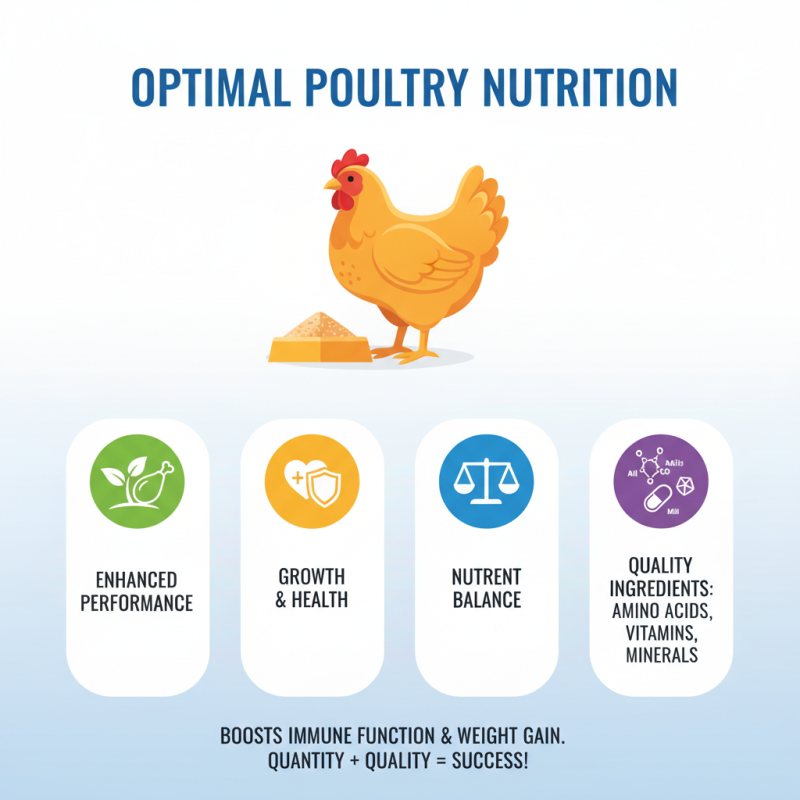
A well-thought-out feed formulation can significantly enhance poultry performance. Nutrition plays a vital role in growth, health, and overall productivity. Assessing nutrient balance is crucial. It's not just about quantity; quality matters too. A diet rich in essential amino acids, vitamins, and minerals boosts immune function and weight gain.
Incorporating grains, proteins, and fats is essential, yet precision is key. Over-reliance on one ingredient can lead to deficiencies. There are always risks. For instance, high protein levels may lead to metabolic disorders. Monitoring the diet composition is critical for optimal results. Regular assessments help in identifying gaps in nutrition.
Additionally, integrating additives like probiotics and enzymes can improve digestion. However, the effectiveness of these additives can vary. Some poultry may not respond as expected. Understanding the unique needs of different flocks is necessary. Balancing cost with performance adds another layer of complexity. Continuous evaluation and adjustment are vital in achieving the ideal feed formulation.
Innovative Additives and Supplements for Poultry Nutrition
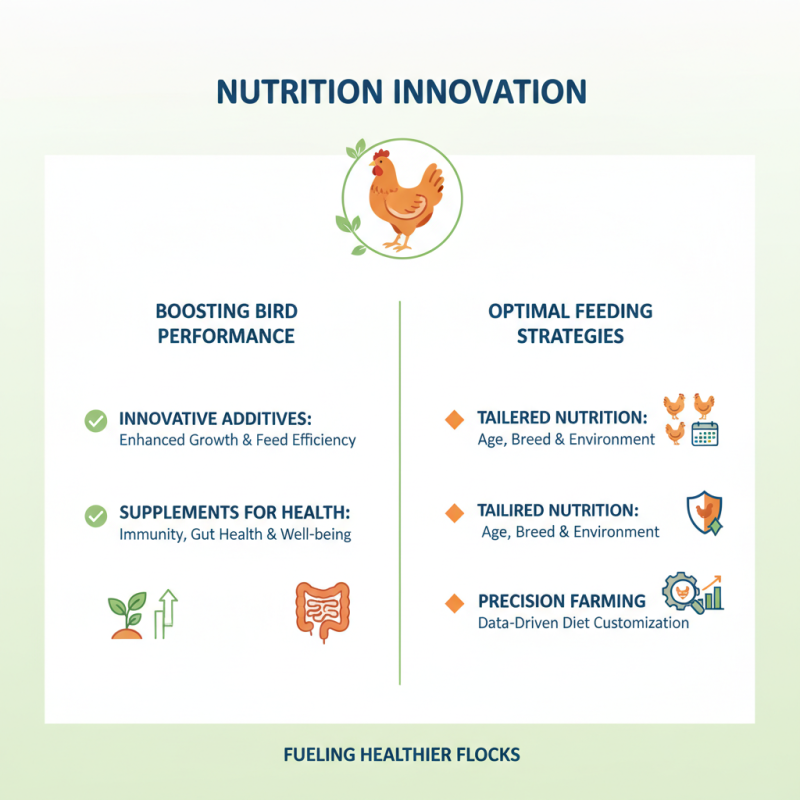
Innovative additives and supplements play a crucial role in poultry nutrition. These products can enhance growth rates and improve overall health in birds. Nutritional requirements vary significantly based on age, breed, and management conditions. Understanding these variations can lead to better feeding strategies.
One promising approach is the use of probiotics. These beneficial microorganisms can support gut health and improve nutrient absorption. Additionally, organic acids have gained attention for their ability to reduce harmful bacteria in the digestive system. However, the effectiveness of these additives can vary based on formulations and application methods.
The challenge lies in finding the optimal combinations of these supplements. Not all poultry will respond the same way. Sometimes, farmers might notice limited improvements, prompting them to reassess feeding strategies. Assessing growth rates, health indicators, and feed conversion is essential to determine the best approach for specific flocks. The nutrition landscape continues to evolve, and so should our strategies.
Monitoring and Adjusting Nutritional Strategies for Different Life Stages
Monitoring nutritional strategies across different life stages in poultry is vital for optimal growth and health. According to the National Research Council, young birds require a diet rich in protein, with an ideal level of around 20-24% for broilers. This ensures proper skeletal development and muscle growth. However, as chickens mature, their protein needs decrease to approximately 16-18%. Adjusting these levels can significantly influence overall health and productivity.
It's crucial to monitor weight gain and feed conversion ratios closely. Research indicates that a 1% improvement in feed conversion can save producers up to $1.00 per bird. Nonetheless, many producers struggle to apply these adjustments effectively. Some may overlook the specific needs of different breeds or environmental factors. Seasonal variations can impact feed intake, necessitating a review of nutritional plans. Maintaining accurate data on growth rates and feed efficiency is essential yet often neglected in practice. Careful, ongoing assessment can lead to improved outcomes and profitability.