Top 10 Best Foods for Healthy Happy Goats?
When it comes to raising happy and healthy goats, choosing the right goat food is crucial. Dr. Sarah Thompson, a renowned goat nutritionist, emphasizes, “The right diet is key to optimal goat health.” What you feed your goats can significantly impact their well-being and productivity.
Goat food varies widely in quality and nutritional value. It's not just about filling their bellies. Proper selection ensures they receive essential vitamins and minerals. Many goat owners make mistakes, opting for cheap options. This often leads to nutritional deficiencies in their herds.
Understanding goat food is vital for both novice and experienced goat keepers. It involves learning about forages, grains, and supplements. Addressing these needs requires research and thoughtful choices. Finding the balance can be challenging, yet it is rewarding when your goats thrive.
Top Nutritional Requirements for Healthy Goats
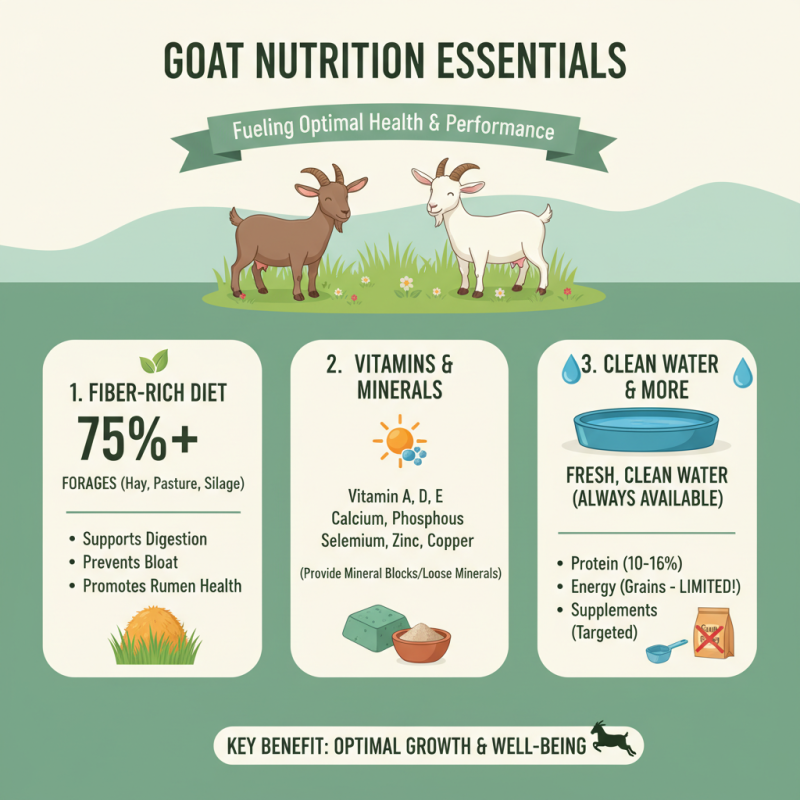
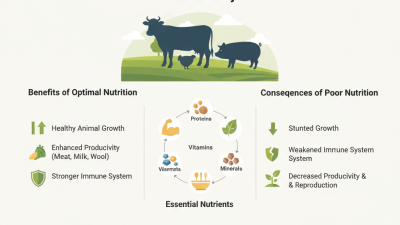
Understanding the nutritional requirements for healthy goats is essential for optimal growth and performance. Goats need a balanced diet rich in fiber, vitamins, and minerals. Forages, like hay and pasture, must make up at least 75% of their diet. Research indicates that quality forage supports rumen health and overall digestion. Inadequate fiber can lead to digestive issues and reduced well-being.
In addition to fiber, goats require specific nutrients, such as calcium and phosphorus. The ideal calcium-to-phosphorus ratio is around 2:1. This balance is crucial for bone development and metabolic processes. Studies show that deficiencies can lead to conditions like urinary calculi. Moreover, goats should receive adequate protein. Growing and lactating goats need 16-18% crude protein. However, overfeeding protein can lead to health challenges.
Water is another critical element. Goats can consume up to 2-3 gallons daily, especially in hot weather. It's easy to overlook, but dehydration affects performance significantly. A clean water supply is vital. Aim for free access to water, especially during lactation. Meeting these nutritional needs can be challenging but rewarding when carefully managed. It’s an ongoing learning process for goat owners.
Essential Vitamins and Minerals for Optimal Goat Health
To maintain optimal goat health, essential vitamins and minerals are crucial. Goats require Vitamin A for vision and immune function. Their diet should include fresh greens and hay rich in this vitamin. Without it, goats may face health issues.
Calcium and phosphorus also play significant roles in their growth. These minerals support strong bones and overall health. Offering a balanced mineral supplement can help ensure adequate intake. Goats can struggle if their diet lacks these nutrients.
Additionally, Vitamin E is vital for maintaining muscle health and reproduction. Incorporating selenium can enhance its effectiveness. However, balancing these nutrients can be tricky. Over-supplementation can lead to toxicity. Regular health checks and consultation with a vet can guide you in achieving the right balance. Providing a diverse diet and observing goat behavior is key to their well-being.
Top 10 Nutritious Grains for Feeding Goats
When choosing grains for goats, nutrition is key. Goats thrive on a varied diet that includes grains. These grains provide essential vitamins and minerals. Some popular grains include barley, oats, and corn. Each grain has different nutritional benefits. Barley, for example, is high in fiber and helps digestion.
Feeding your goats too much of one grain can lead to issues. Variety is important. Some owners might stick to corn because it’s popular, but it lacks certain nutrients. Mixing grains can create a balanced diet. Consider adding wheat or rye for additional nutrition.
Watch for any signs of discomfort in goats after feeding. Adjust quantities according to their reactions. It’s also crucial to ensure fresh water is always available. Healthy grains are vital, but they must be part of an overall balanced diet.
Benefits of Fresh Fruits and Vegetables in Goat Diets
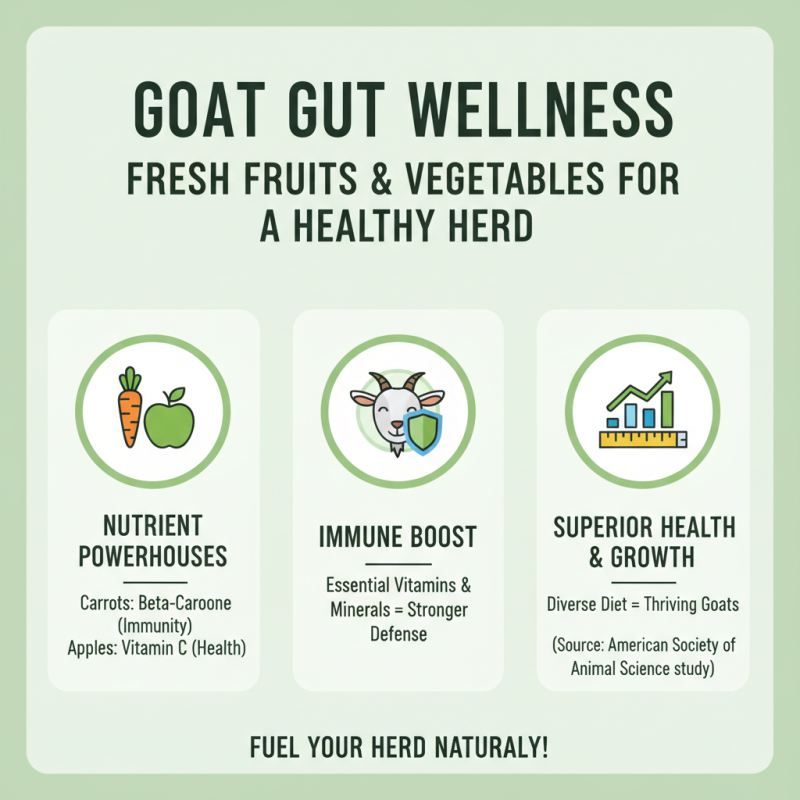
Fresh fruits and vegetables play a crucial role in goat diets. They provide essential vitamins and minerals. For instance, carrots and apples are excellent sources of beta-carotene and vitamin C. These nutrients help strengthen the immune system. According to a study by the American Society of Animal Science, goats that consume a diverse diet exhibit better health and growth rates.
Moreover, fresh produce can enhance the overall mood of goats. An observation by veterinarians noted that goats fed fresh fruits showed increased playfulness. These foods can also reduce stress levels. Goats naturally enjoy foraging, so incorporating fruits into their diets aligns with their instincts. However, too many sugary fruits can lead to digestive issues.
In winter months, access to fresh vegetables becomes a challenge. Some farmers struggle to provide a balanced diet. Implementing seasonal strategies can help. A mix of fresh greens and preserved hay ensures that goats receive adequate nutrients. Regular monitoring of their health is essential. Over time, adjusting their diet based on observations can lead to improvement in both mood and productivity.
The Role of Forage Quality in Goat Nutrition and Well-being
For goats, high-quality forage is crucial. Studies show that forage can account for 70% of their diet. Good forage includes grass, legumes, and browse. Quality impacts digestion and nutrient absorption. Goats need a variety. This variety helps maintain gut health and stable body condition.
Research indicates that goats fed on premium forage have better growth rates. They exhibit improved reproductive performance too. A survey highlighted that 90% of goat breeders prioritize forage quality. Higher quality leads to healthier animals, which is vital for both well-being and productivity.
Maintaining forage quality isn't always easy. Environmental factors can affect growth rates. Soil health plays a big role. Without proper management, forage quality could decline. Regular testing of forage can offer insight into nutrient content. This helps make informed feeding decisions. Goats thrive when given the right resources and care.