10 Chicken Feed Buying Tips for Global Buyers?
Buying chicken feed across borders is not simply a price exercise. It is a risk decision.
Alltech’s 2024 Agri-Food Outlook reported approximately 1.126 billion metric tons of global feed production in 2023. Poultry remained one of the largest consuming sectors. Meanwhile, the OECD-FAO Agricultural Outlook 2024–2033 expects poultry meat demand to keep expanding, especially in emerging markets. More birds mean more feed decisions, but not always better decisions.
Dr. Mark Lyons, President and CEO of Alltech, has emphasized, “We must produce more food with fewer resources.” That principle matters when buyers compare corn, soybean meal, vitamins, enzymes, and complete rations. A cheaper bag may contain less usable nutrition, higher moisture, or inconsistent ingredients. The invoice can look attractive. The feed conversion ratio may disagree.
This guide presents 10 chicken feed buying tips for global buyers. It examines supplier verification, ingredient quality, formulation, storage, certificates, transport conditions, and cost transparency. Practical details matter. A humid container can damage pellets before they reach the farm. A missing batch number can weaken traceability. A delayed shipment can disrupt a feeding program within days.
Still, no checklist removes every uncertainty. Local grain quality changes. Freight costs move quickly. Even reliable suppliers can make mistakes. Buyers should test samples, review records, and question convenient claims. That extra step feels slow. It can prevent expensive surprises.
The goal is not to find the cheapest chicken feed. It is to secure consistent nutrition, documented quality, and dependable supply for different production environments.
Match Feed Specifications to Broiler, Layer, and Breeder Requirements
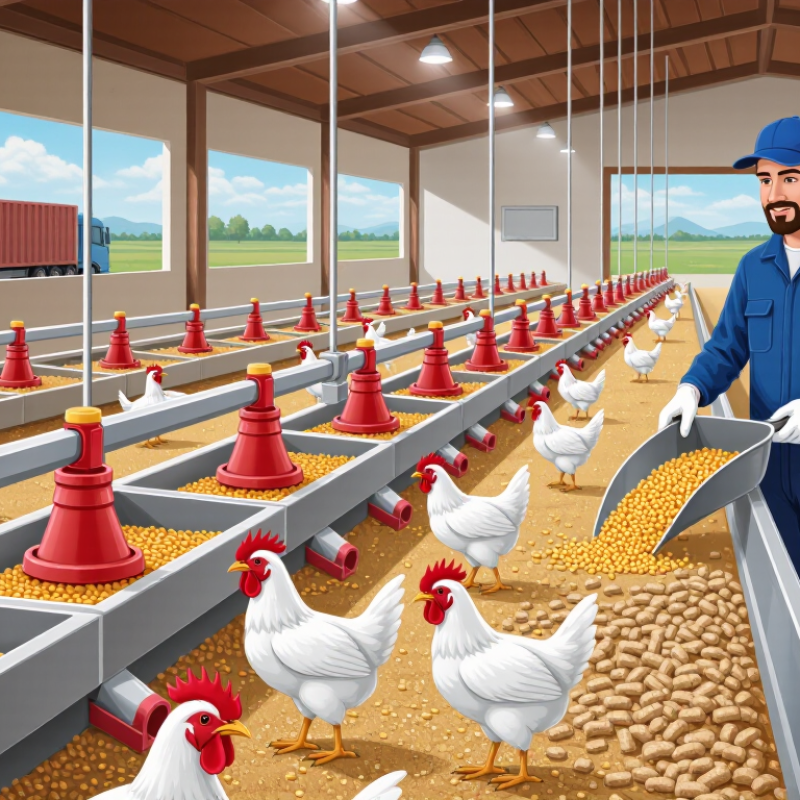
Global chicken feed buying starts with the bird’s purpose, not the lowest quotation. Broilers need digestible energy and balanced amino acids for rapid muscle growth. Layers require controlled energy, stable protein, calcium, and available phosphorus for shell quality. Breeders need careful body-weight control, reproductive support, and appropriate mineral levels. Do not guess.
Ask suppliers for a complete specification sheet, including crude protein, amino acids, calcium, phosphorus, moisture, fiber, and metabolizable energy. Confirm whether values are guaranteed, typical, or laboratory-tested. I have seen buyers compare protein percentages while missing amino acid balance. That mistake can increase feed waste and weaken performance.
Match the formula to the flock’s age and production stage. Starter, grower, developer, pre-lay, and breeder diets should not share one specification. Check pellet size, crumble quality, fines, density, and transport stability. Small details matter. A layer feed with poor particle uniformity may leave powder in the feeder, while a broiler pellet with excessive fines can reduce intake. Request recent test results for moisture, mycotoxins, and microbiological safety. Review storage conditions at the destination, including humidity and heat exposure. Local feed regulations, labeling rules, and permitted additives also require verification before shipment. Keep batch records and retain samples for independent testing when practical. Mistakes happen, even with careful teams. Recheck assumptions before signing.
10 Chicken Feed Buying Tips for Global Buyers: Match Feed Specifications to Broiler, Layer, and Breeder Requirements
Feed specifications should match the bird’s production stage. Broiler starter feed typically requires higher protein for rapid muscle growth, while layer and breeder feeds require substantially more calcium for eggshell formation. The figures below are typical commercial formulation targets and should be checked against local regulations, climate, genetics, and veterinary nutrition advice.
- Confirm the target bird type and production stage before purchasing.
- Compare crude protein with the supplier’s guaranteed analysis.
- Check calcium and available phosphorus for bone and eggshell development.
- Verify metabolizable energy is appropriate for the flock’s growth or production goal.
- Review amino acid levels, especially lysine and methionine.
- Confirm vitamin and trace-mineral inclusion levels.
- Check ingredient quality, freshness, and storage conditions.
- Request laboratory test results for moisture, mycotoxins, and contaminants.
- Match pellet or crumble size to bird age and feeding equipment.
- Compare specifications, delivery terms, shelf life, and batch traceability.
Set Protein Targets: Broiler Diets Commonly Contain 18–23% Crude Protein
When buying chicken feed internationally, set a clear crude protein target before comparing prices. Broiler diets commonly contain 18–23% crude protein, depending on age, genetics, climate, and production goals. Starter feed usually needs more protein than later finisher feed. The exact figure should come from a qualified poultry nutritionist, not a sales sheet alone.
Crude protein is only one part of the formula. Check amino acid levels, especially lysine and methionine, because birds need usable nutrients for muscle growth. Ask for a recent laboratory analysis, ingredient list, moisture level, and batch details. A feed showing 22% protein may still perform poorly if its amino acid balance is weak. That detail is easy to miss.
Storage conditions matter too. Heat, humidity, and long shipping periods can reduce feed quality. Use sealed packaging and inspect for clumps, unusual odors, insects, or visible mold. Do not accept vague claims such as “high protein” without test data. I have seen buyers focus heavily on the percentage and overlook digestibility. That is an imperfect buying habit. Compare results from small trial groups before placing a large order, while keeping age, housing, and water quality consistent. Regional grain differences can also change results, even when the label looks identical.
10 Chicken Feed Buying Tips for Global Buyers? - Set Protein Targets: Broiler Diets Commonly Contain 18–23% Crude Protein
| No. |
Buying Dimension |
Practical Target or Requirement |
Why It Matters |
Buyer Verification Point |
| 1 |
Broiler starter protein |
Approximately 22–23% crude protein, commonly fed during the first 2–3 weeks. |
Young broilers have high requirements for tissue growth and feather development. |
Check the guaranteed analysis and confirm that the product is specifically formulated as starter feed. |
| 2 |
Broiler grower protein |
Approximately 20–21% crude protein during the growing phase. |
Supports continued lean-muscle growth while feed intake increases. |
Match the feed to the farm’s planned changeover age and local production system. |
| 3 |
Broiler finisher protein |
Approximately 18–19% crude protein before market weight. |
Provides a lower protein level appropriate for the final growth stage and helps manage feed cost. |
Verify the intended market age, energy level, and withdrawal requirements for additives. |
| 4 |
Protein quality |
Do not judge feed only by crude protein; review essential amino acids such as lysine and methionine. |
Two feeds with the same crude-protein percentage can differ in usable amino-acid supply. |
Request an amino-acid specification or a current laboratory analysis where available. |
| 5 |
Energy balance |
Select a diet with metabolizable energy appropriate for the bird’s age and production objective; broiler formulas commonly use higher energy than chick starter formulas. |
Energy density affects feed intake, growth rate, and feed-conversion performance. |
Compare declared energy values on the same measurement basis, such as MJ/kg or kcal/kg. |
| 6 |
Moisture control |
Prefer feed with moisture commonly around 12–13% or lower, subject to the applicable feed standard. |
Excess moisture increases the risk of mold, caking, heating, and nutrient deterioration. |
Review the moisture result, inspect bags for dampness, and reject feed with visible mold or a musty odor. |
| 7 |
Fiber and ingredient consistency |
Broiler diets generally require controlled fiber; avoid unexplained increases in crude fiber between shipments. |
High or variable fiber can reduce nutrient density and affect digestibility and growth. |
Compare the ingredient declaration and laboratory results with the agreed purchasing specification. |
| 8 |
Mineral specification |
Check calcium and available phosphorus according to bird age; starter and finisher diets do not use identical mineral levels. |
Mineral balance supports bone development, skeletal strength, and normal metabolism. |
Request calcium, total phosphorus, available or digestible phosphorus, and any local compliance documentation. |
| 9 |
Pellet or crumble quality |
Use particle size suited to age: crumbles or small pellets for chicks, with larger pellets often used as birds grow. |
Appropriate physical form reduces wastage and helps maintain uniform feed intake. |
Check fines, pellet durability, dust levels, and whether the feed flows properly through the farm’s equipment. |
| 10 |
Traceability and storage |
Every shipment should show batch identification, production date, expiry or best-before date, net weight, and storage instructions. |
Traceability supports quality claims, complaint handling, and feed-safety control across international shipments. |
Confirm sealed packaging, dry transport, first-in-first-out storage, and compliance with the destination country’s feed regulations. |
|
Reference note: The protein ranges shown are practical commercial targets commonly used for broiler phases. Exact nutrient specifications vary with genetics, climate, ingredient quality, production system, local regulations, and the form of nutrient evaluation used by the feed formulator.
|
Control Contamination: Keep Aflatoxin Below the FDA’s 20-ppb Action Level
Global buyers should treat aflatoxin control as a lot-management task, not a final laboratory checkbox. The U.S. Food and Drug Administration’s Compliance Policy Guide 683.100 identifies 20 ppb, or 20 µg/kg, as the action level for feed intended for immature poultry. Aflatoxin B1 can remain after visible mold disappears. It may enter through maize, peanut meal, and other vulnerable ingredients. Heat and moisture increase the risk during storage.
Tip: Request a lot-specific certificate showing the sampling date, method, laboratory accreditation, and aflatoxin B1 result. A single scoop is weak evidence because contamination is uneven. Collect multiple increments across the truck, container, or silo. Then combine them into a representative sample. FDA sampling guidance stresses representative collection for mycotoxin testing. Set an internal alert below 20 ppb, perhaps at 10–15 ppb. This buffer allows for testing variation. It is practical, not a universal legal requirement.
Tip: Inspect the physical story. Look for warm bags, caked meal, leaking roofs, and broken seals. Record moisture, temperature, origin, harvest season, and storage time. Ask for trend data, not one favorable report. Rapid tests can screen shipments, but accredited laboratories should confirm questionable lots. I would not trust a clean report from an unsealed sample. Nor should buyers assume fumigation removes toxins. Control begins before loading. Destination-market limits may differ from the FDA threshold.
Compare Feed Forms: Pelleting May Improve Feed Conversion by 2–5%
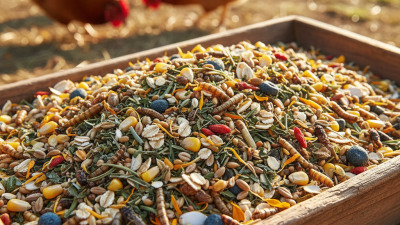
For global poultry buyers, feed form deserves the same attention as protein and energy levels. Pelleting can improve feed conversion by roughly 2–5% in suitable commercial conditions, according to findings commonly reported in poultry nutrition and feed-manufacturing trials. A lower feed conversion ratio means fewer kilograms of feed for each kilogram of live weight gained. That difference matters when corn, soybean meal, freight, and storage costs remain volatile.
The National Research Council’s Nutrient Requirements of Poultry explains that physical feed form influences intake, wastage, and nutrient use. Pellets reduce fine particles and encourage more uniform consumption. They also limit selective feeding at the trough. In a practical test, inspect pellet durability, fines percentage, moisture, and temperature. A dusty bag may erase the expected benefit. Feed quality is never automatic.
The OECD-FAO Agricultural Outlook 2024–2033 projects continued growth in global poultry production, increasing pressure on feed efficiency. Yet the 2–5% improvement should not be treated as a guaranteed return. Poor conditioning, excessive heat, or unsuitable pellet size can damage nutrients and bird performance. Buyers should compare mash and pellets using the same flock age, genetics, housing, and energy density. Small trials are wiser than confident assumptions.