10 Essential Tips for Choosing the Best Sheep Feed for Your Flock?
Choosing the right sheep feed is crucial for a healthy flock. Proper nutrition impacts sheep growth, reproduction, and overall well-being. It’s not just about quantity; quality matters too. Many farmers struggle with finding the best feed.
Different sheep breeds have varying dietary needs. For example, wool-producing breeds may require specific nutrients. Interestingly, what works for one flock might not suit another. This makes careful consideration important.
Farmers should pay attention to ingredients in sheep feed. Whole grains, legumes, and minerals should be prioritized. Avoid fillers that offer little nutritional value. Understanding sheep behavior can guide feed choices. Observing how your flock reacts to different feeds is key for improvement. The goal is to promote optimal health and productivity.
Understanding the Nutritional Needs of Sheep for Optimal Health
When selecting sheep feed, understanding their nutritional needs is essential for optimal health. Sheep require a balanced diet rich in fiber, protein, vitamins, and minerals. A diet primarily based on high-quality forage ensures their digestive health. You should observe their feeding habits. Are they eagerly grazing? If not, their feed may be lacking in nutrients.
Consider the types of feed you provide. Grass, hay, and silage should be staples in your flock's diet. Concentrates can supplement these, especially during breeding or lactation periods. Pay attention to the mineral content of the feed. Sheep need adequate levels of calcium, phosphorus, and magnesium to thrive. Sometimes, a mineral block may be necessary.
Remember that every flock is unique. Factors such as age, weight, and health status affect dietary needs. Monitor your sheep regularly. Are they gaining weight as expected? Changes in weight can signal nutritional deficiencies or imbalances. Feeding is not a one-size-fits-all approach; adjust as necessary for your flock's needs.
Evaluating Different Types of Sheep Feed: Grains, Hay, and Supplements
When selecting the right feed for your sheep, it’s essential to understand the differences between grains, hay, and supplements. Grains, like corn or barley, can provide quick energy. However, too much grain can lead to digestive issues. Monitor your sheep's behavior closely after introducing new grains.
Hay is a staple in a sheep's diet. It offers fiber and promotes healthy digestion. Choose hay that is fresh and free from mold. You may find that some sheep prefer different types of hay. Observe their preferences to make better feeding choices.
Supplements can be beneficial, especially during pregnancy or lactation. They can boost nutrients in sheep's diets, but not all sheep require them. Adjust based on health and production goals. Always consult with a vet for guidance. Balancing these types of feed can be tricky. Regular evaluations and adjustments are necessary. Your flock’s health relies heavily on these choices.
Identifying Quality Ingredients in Sheep Feed for Better Digestion
When choosing sheep feed, identifying quality ingredients is crucial for optimal digestion and overall flock health. High-quality forage, grains, and protein sources improve nutrient absorption. Research indicates that feeds rich in digestible fiber enhance rumen function, leading to healthier sheep. A study published in the Journal of Animal Science emphasizes that a balanced diet can boost wool production and reproductive performance.
Tip: Always look for feeds with minimal fillers. Fillers like sawdust or low-quality grains provide little nutrition. Instead, opt for feeds that list whole grains and legumes as primary ingredients. These components are vital for energy and protein.
Quality ingredients also affect palatability. Sheep are less likely to consume feeds that are unappealing. A survey shows that flocks prefer diets with natural flavors and textures. Be wary of overly processed feeds; they often contain unnecessary additives. This can hinder digestion.
Tip: Analyze the guaranteed analysis on feed labels. Look for key nutrients such as protein, fat, and fiber content. A well-balanced feed should contain at least 12-15% protein for growing lambs. Poor nutrition can lead to stunted growth or health issues. Regular evaluation of your sheep's condition can guide adjustments in their diet.
Considering the Age and Purpose of Your Flock When Choosing Feed
Choosing the right sheep feed can significantly impact your flock's health and productivity. Age and purpose play crucial roles in this decision. For growing lambs, a high-protein diet with 18-20% crude protein is essential. This supports muscle development and ensures proper growth rates. A nutrient report suggests that young sheep require more energy than adults due to their rapid growth stages.
For ewes preparing for lambing, feed high in fiber and low in starch is recommended. It helps in maintaining digestive health. A study revealed that ewes on appropriate diets have improved pregnancy rates. Lactating ewes also need special attention. They require extra calcium and phosphorus for milk production. Many farmers overlook these needs, leading to health issues in both ewes and lambs.
Ultimately, it's vital to adjust feed based on individual needs. Each flock is unique. Poor feeding strategies can lead to wasted resources and poor performance. Assess your flock regularly. Monitor their body condition and adjust their feed as necessary. This evaluation can prevent problems and improve overall flock health.
Consulting with Veterinarians or Nutritionists for Professional Guidance
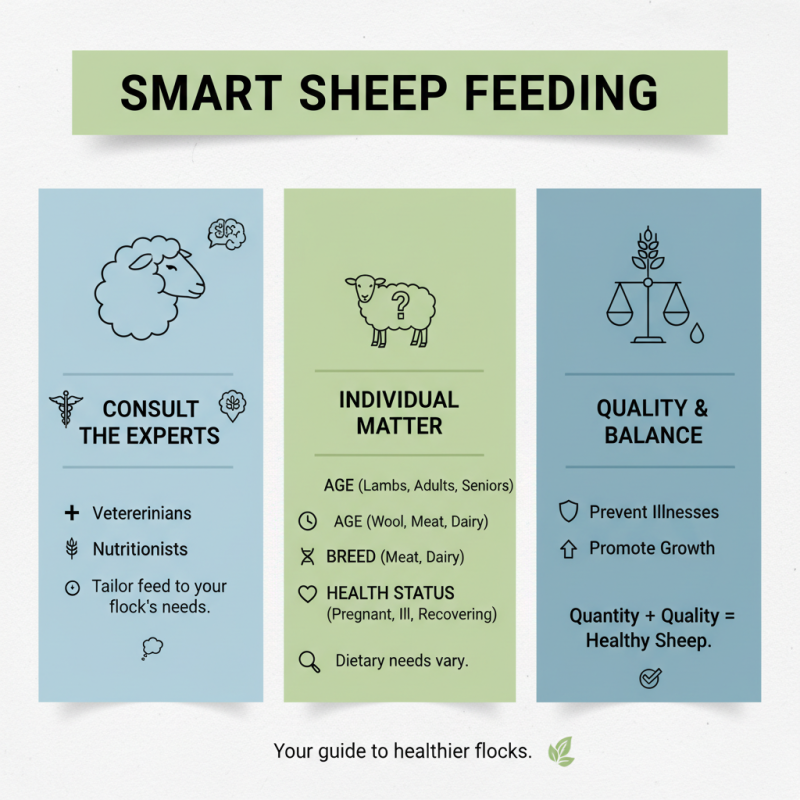
When it comes to feeding sheep, consulting with veterinarians or nutritionists is essential. These professionals have the expertise to tailor feed recommendations based on your flock's specific needs. Every sheep is different. Factors such as age, breed, and health status influence dietary requirements. A balanced diet can prevent illnesses and promote growth. It’s not just about quantity; it’s also about quality.
Many flock owners overlook the importance of professional guidance. Relying on general advice can lead to ineffective feeding practices. Some sheep may require additional minerals or vitamins. Without these, the flock could face nutritional deficiencies. Engaging with a nutritionist ensures you are making informed decisions. Document any changes in your sheep's health or behavior after the new diet. This feedback is invaluable.
However, it’s important to remain open to adjustments. Not all advice will yield perfect results immediately. You may need to experiment with different types of feed. Monitor how your sheep respond to changes. This process requires patience and ongoing reflection. By taking the time to consult experts and observing your flock, you can significantly improve their health and productivity.