How to Optimize Livestock Nutrition for Better Animal Health and Productivity
In the pursuit of improved animal health and productivity, optimizing livestock nutrition stands at the forefront of agricultural innovation. According to Dr. Jane Smith, a renowned expert in livestock nutrition, “Proper nutrition is the backbone of healthy livestock, influencing not just their growth but also their overall well-being.” This highlights the critical role that tailored diets play in enhancing the performance and productivity of livestock, thereby sustaining the industry's economic viability.
As farmers and producers strive to meet the growing global demand for animal products, understanding the nuances of livestock nutrition becomes increasingly essential. Comprehensive nutritional strategies can lead to stronger immune systems, better weight gain, and improved reproductive success in livestock. By incorporating scientific research and practical applications into feeding regimes, livestock producers can significantly impact not only their animals' health but also their operational efficiency.
In conclusion, investing time and resources into the optimization of livestock nutrition is not merely an option; it is a necessity for anyone looking to thrive in the competitive landscape of agriculture. Emphasizing the importance of nutrition will ultimately lead to sustainable practices that benefit both the animals and the larger ecosystem.

Understanding Livestock Nutritional Needs and Requirements
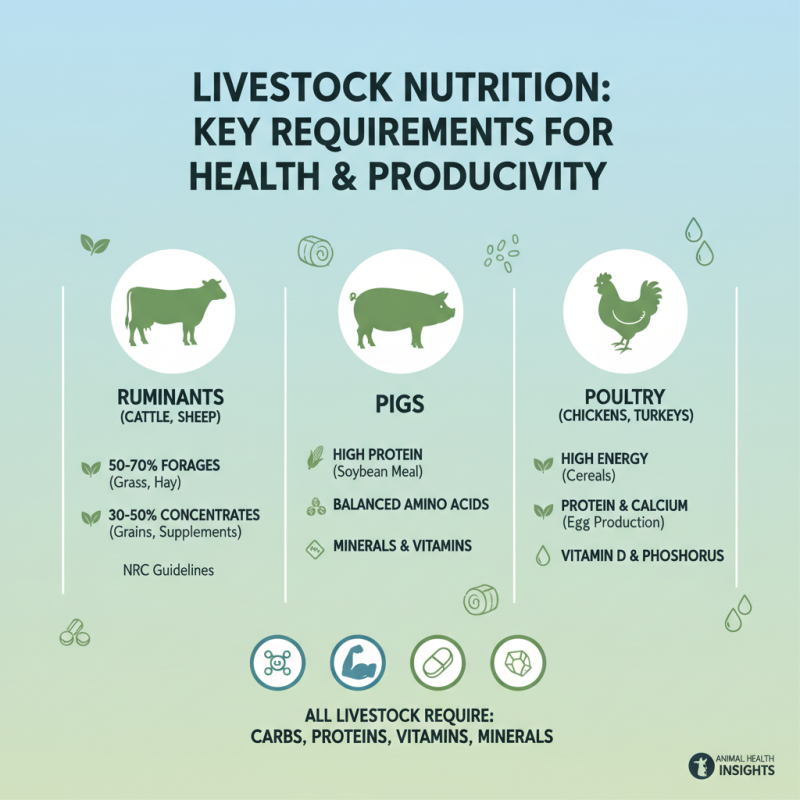
Understanding livestock nutritional needs and requirements is crucial for enhancing animal health and productivity. Livestock, like cattle, pigs, and poultry, have specific nutritional requirements that must be met to ensure optimal growth, reproduction, and overall well-being. According to the National Research Council, ruminants require a balanced diet comprising about 50-70% of their diet from forages and the remainder from concentrates and supplements, which provide essential nutrients such as carbohydrates, proteins, vitamins, and minerals.
Various studies underscore the significance of tailored nutrition in improving livestock performance. For instance, a 2022 report by the Food and Agriculture Organization (FAO) indicates that optimizing feed efficiency can lead to increased meat and milk production by as much as 20%, thereby positively impacting profitability for producers. Moreover, understanding these nutritional needs allows farmers to minimize feed waste and improve conversion rates, which are critical for sustainable farming practices. By analyzing factors such as age, breed, and production goals, producers can formulate diets that align with the specific requirements of their livestock, ultimately leading to healthier animals and enhanced productivity.
Essential Nutrients for Optimal Animal Health and Growth
Providing essential nutrients is crucial for optimal animal health and growth. Livestock require a balanced diet composed of macronutrients such as carbohydrates, proteins, and fats, as well as micronutrients including vitamins and minerals. Carbohydrates are a primary energy source, while proteins are vital for tissue development and repair. Fats, although required in smaller amounts, play significant roles in hormone production and nutrient absorption. Ensuring that livestock receive the right proportions of these macronutrients is fundamental to enhancing their overall performance.
In addition to macronutrients, vitamins and minerals are indispensable for health and productivity. Vitamins such as A, D, E, and K contribute to immune function, bone health, and reproductive success. Minerals like calcium, phosphorus, and trace elements such as zinc and selenium are essential for metabolic functions, promoting growth and maintaining health. A deficiency in any of these vital nutrients can lead to poor growth rates, reproduction issues, and increased susceptibility to disease. Therefore, it is important for livestock producers to implement nutritional strategies that meet the specific needs of their animals based on age, weight, and production goals to optimize health and productivity.
Essential Nutrients for Optimal Animal Health and Growth
Evaluating Feed Quality and Its Impact on Livestock Productivity
Feed quality is a critical factor in optimizing livestock nutrition, significantly influencing both animal health and productivity. Recent studies indicate that the nutritional composition of feed directly correlates with growth rates, milk production, and overall well-being in livestock. According to the National Animal Feed Coalition, high-quality feed can improve feed conversion rates by up to 30%, allowing animals to convert feed into body mass more efficiently. This is particularly relevant in today’s agricultural landscape, where cost-effective production practices are paramount.
Furthermore, the presence of essential nutrients, such as proteins, vitamins, and minerals, plays a vital role in enhancing livestock productivity. Research published in the Journal of Animal Science has demonstrated that deficiencies in these nutrients can lead to reduced growth performance and increased susceptibility to diseases. For instance, a deficiency in selenium and vitamin E has been linked to increased incidences of white muscle disease in cattle, impacting herd health and profitability. By evaluating feed quality and ensuring that livestock diets meet the necessary nutritional standards, farmers can enhance productivity while fostering healthier animals, ultimately leading to improved economic outcomes in the livestock industry.
How to Optimize Livestock Nutrition for Better Animal Health and Productivity - Evaluating Feed Quality and Its Impact on Livestock Productivity
| Feed Type |
Nutritional Quality (CP%) |
Fiber Content (NDF%) |
Average Daily Gain (ADG) (kg) |
Feed Conversion Ratio (FCR) |
| Corn Silage |
8.0 |
40.0 |
1.5 |
6.0 |
| Alfalfa Hay |
17.0 |
30.0 |
1.8 |
5.0 |
| Soybean Meal |
48.0 |
7.0 |
2.0 |
4.5 |
| Barley Grain |
12.5 |
25.0 |
1.6 |
5.8 |
| Oats |
10.0 |
32.0 |
1.4 |
6.5 |
Implementing Feeding Strategies for Different Livestock Species
Implementing effective feeding strategies tailored to different livestock species is crucial for optimizing nutrition, enhancing animal health, and improving productivity. According to a report by the Food and Agriculture Organization (FAO), livestock nutrition can significantly impact growth rates and reproductive performance, with properly formulated diets leading to production increases of up to 20%.
For instance, cattle require a balanced diet rich in forages, grains, and protein supplements to achieve optimal weight gain and milk production. Understanding the specific nutritional needs of ruminants, such as the importance of fiber for proper rumen function, can lead to more effective feeding regimens that promote overall herd health.
In contrast, monogastric animals, like pigs and poultry, have distinct dietary requirements that emphasize energy and protein sources. Research indicates that precision feeding for these species can result in feed conversion ratios improving by 10-15%, enhancing profitability for livestock producers. By utilizing data-driven approaches, farmers can tailor feed formulations to meet the specific growth stages and production goals of their livestock.
For example, the use of amino acid supplementation in pig diets can support muscle development and overall growth, showcasing the need for a species-specific approach to livestock nutrition.
Monitoring and Adapting Nutrition Plans for Continuous Improvement
Monitoring and adapting nutrition plans for livestock is crucial for enhancing animal health and productivity. By continuously assessing the dietary needs of the animals based on their growth stages, environmental conditions, and health status, farmers can fine-tune nutritional strategies to promote optimal health outcomes. Regular evaluations can include observing physical signs of health, such as body condition scoring, as well as analyzing feed consumption patterns and productivity metrics. These observations help identify any deficiencies or imbalances that could hinder performance, enabling timely adjustments to the diet.
Moreover, incorporating data analytics tools can greatly enhance the monitoring process. Utilizing technology to track feed intake, weight gain, and overall health indicators allows for more precise adjustments to nutrition plans. This data-driven approach helps farmers make informed decisions and can lead to significant improvements in animal welfare and productivity. By fostering a culture of continuous learning and adaptability in nutrition management, livestock producers can ensure that their animals thrive, which in turn supports sustainable farming practices and economic viability.