Top 10 Tips for Using Freeze Dried Fruits in Your Recipes?
In recent years, the popularity of Freeze Dried Fruits has surged. According to a report by Market Research Future, the global freeze dried fruit market is expected to reach $1.4 billion by 2025, reflecting a growing consumer interest in innovative food ingredients. Industry expert Dr. Anna Foster notes, "Freeze dried fruits offer unmatched convenience while retaining essential nutrients." This highlights the nutritional appeal of these products.
Using freeze dried fruits in recipes opens up numerous culinary possibilities. Their lightweight nature makes them easy to incorporate into both sweet and savory dishes. However, balancing flavors and textures can sometimes be a challenge. Some users might struggle to rehydrate these fruits properly or might overlook their unique qualities, which can lead to disappointing results in the kitchen.
Experimentation is key when integrating freeze dried fruits into your cooking. Each variety presents distinct characteristics. Understanding these nuances can elevate your dishes, but it takes practice to master their use. Embracing trial and error will help uncover the true potential of freeze dried fruits in everyday recipes.
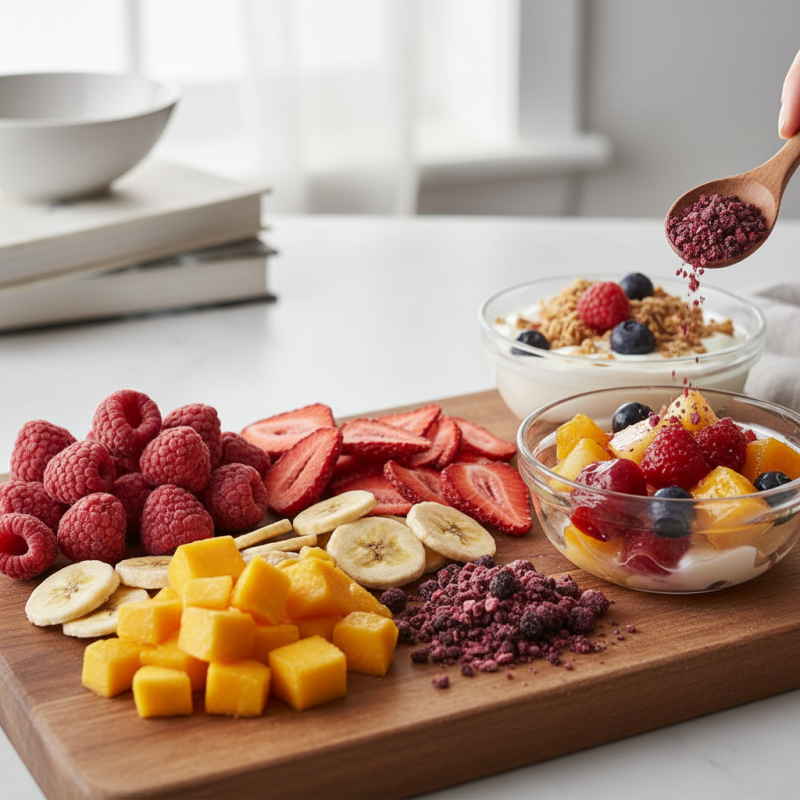
Top Benefits of Using Freeze Dried Fruits in Cooking and Baking
Freeze dried fruits are revolutionizing cooking and baking. They retain most of their nutrients, making them a healthy choice. According to a 2022 report by the Food Science Institute, freeze dried fruits can preserve up to 90% of their vitamins and minerals. This process keeps the natural flavors intact, enhancing dishes when added.
Using freeze dried fruits is convenient. They have a long shelf life—often exceeding 25 years. This means you can have seasonal fruits year-round. You just need to hydrate them in water or add them directly to recipes. However, not all flavors rehydrate perfectly. Sometimes, the texture might not match fresh fruits, leaving dishes feeling off.
The versatility of freeze dried fruits is notable. You can use them in smoothies, desserts, or salads. They add vibrant colors and intense flavors. A study from Nutrition Today noted that incorporating these fruits can increase fiber intake by 14%. But beware, overuse can make dishes overly sweet. It's a balancing act to get the best results.
Understanding the Nutritional Profile of Freeze Dried Fruits
Freeze dried fruits retain much of their nutritional value while providing a unique taste and texture. According to a report by the United States Department of Agriculture, freeze drying preserves about 95% of the original nutrients. This means you get antioxidants, vitamins, and minerals in a lightweight form. For example, strawberries can maintain their vitamin C levels, making them a flavorful addition to recipes.
Incorporating freeze dried fruits can be tricky at times. The rehydration process is not always straightforward. Some fruits taste different once rehydrated. You might need to experiment with the amount of water and soak time to achieve the desired texture. A study noted that freeze-dried blueberries can lose some antioxidants when used in baking. Some nutrients might degrade at high temperatures.
It's essential to consider quality when using freeze dried fruits. Not all products are created equal. Some may have added sugars or preservatives that can alter their nutritional profile. Reading labels carefully is vital. Be aware that while they are convenient, freeze dried fruits should not completely replace fresh fruits in your diet. Balance is key to maximizing the benefits of nutrients.
Top 10 Tips for Using Freeze Dried Fruits in Your Recipes
| Tip | Description | Nutritional Benefit |
| 1. Use in Smoothies | Add freeze dried fruits to smoothies for a burst of flavor and natural sweetness. | Rich in vitamins and antioxidants. |
| 2. Perfect for Baking | Incorporate into muffins, bread, or cookies for added flavor. | High in fiber which aids digestion. |
| 3. Add to Salads | Toss into salads for a crunchy texture and added sweetness. | Low in calories while providing satisfying taste. |
| 4. Make Fruit Parfaits | Layer with yogurt and granola for a delicious breakfast or snack. | Source of protein and calcium from yogurt. |
| 5. Trail Mix Ingredient | Incorporate into homemade trail mixes for a nutritious snack on the go. | Offers energy-boosting nutrients from fruits and nuts. |
| 6. Rehydrate for Sauces | Soak in water to rehydrate and use in sauces or toppings. | Maintains vitamins while enhancing sauces. |
| 7. Sprinkle on Cereal | Use as a topping on cereal or oatmeal for extra flavor. | Added vitamins and minerals while being low in sugar. |
| 8. Garnish Desserts | Use as a decorative topping on cakes and desserts. | Enhances aesthetic and nutritional value. |
| 9. Make Infused Water | Add to water for a natural fruit-infused beverage. | Promotes hydration with added flavor. |
| 10. Enjoy as a Snack | Eat them straight out of the bag for a healthy snack. | Provides a nutritious, guilt-free snack option. |
Best Practices for Rehydrating Freeze Dried Fruits in Recipes
Rehydrating freeze-dried fruits properly can elevate your dishes significantly. Industry reports indicate that the nutritional value of freeze-dried fruits retains up to 90% of their original state, making them an excellent choice for healthy recipes. However, the rehydration process is crucial. Here are some best practices.
Soak the fruits in warm water for about 10 to 15 minutes. This can restore their texture and flavor. Try using fruit juice or yogurt for added taste and richness. The combination can enhance the overall dish. Avoid using boiling water; it can break down the nutrients.
Tip one: experiment with different soaking times. Some fruits may need a longer period to fully rehydrate. For instance, bananas might need an extra five minutes compared to strawberries.
Tip two: don’t forget to drain excess water after soaking. Too much moisture can alter the consistency of your final dish. Finding balance here is essential and may require some trial and error.
Thinking about moisture levels is important. Fruits with higher sugar content, like mangoes, might not require as much rehydration time. Monitor your results. Each fruit behaves differently, and adjustments may be necessary.
This process can make cooking more intuitive. Engaging with your ingredients helps refine your approach to using freeze-dried fruits effectively. Be open to adjusting your methods based on experience.
Creative Ways to Incorporate Freeze Dried Fruits into Your Dishes
Freeze-dried fruits are a versatile ingredient. They bring unique flavors and interesting textures to various dishes. Try adding them to your morning oatmeal. It creates a delightful crunch. You can also rehydrate them for smoothies, enhancing taste and nutrition. Just blend them into your favorite recipes for an instant flavor boost.
Baking with freeze-dried fruits can be experimental. They can transform simple muffins and cookies into something extraordinary. Consider adding them to pancake batter for a pop of color and flavor. However, beware of the balance. Too much can overpower the main ingredients. Finding that perfect equation requires some trial and error.
Salads benefit greatly from these fruits. Toss in some freeze-dried berries for a refreshing twist. They add a sweet yet tangy element that surprises the palate. Don’t forget to think outside the box. Freeze-dried fruits can even be ground into a powder. This powder can then be added to yogurt or dressing for new tastes. The possibilities are endless, but take time to explore the right combinations. Experimentation is key!
Top 10 Tips for Using Freeze Dried Fruits in Your Recipes
Here is a comparison of the most popular freeze-dried fruits and their recommended usage in various recipes.
Storage Tips to Maximize the Shelf Life of Freeze Dried Fruits
Freeze-dried fruits are a delightful addition to many recipes. They’re lightweight and retain most of their nutrients. However, proper storage is crucial to maximize their shelf life. According to industry data, if stored correctly, freeze-dried fruits can last up to 25 years! Here are some practical storage tips.
Keep the fruits in a cool, dark, and dry place. UV light can degrade the quality over time. Use airtight containers to seal in freshness. Mylar bags with oxygen absorbers work wonders. You might find it surprising, but even minor exposure can lead to a decline in flavor and texture.
Tip: Label your containers with the purchase date. This simple act helps you track freshness. Additionally, you should avoid opening containers frequently. Each time you expose them to air, the quality may diminish.
Reevaluate your storage practices regularly. Do you find fruits losing crunchiness? It might be time to check those seals. An investment in quality storage can yield delicious results in your culinary adventures. Use these tips to make every bite of freeze-dried fruits count!