2026 Top Trends in Chicken Feed for Sustainable Farming Solutions?
In 2026, the poultry industry is set to witness significant shifts, especially in chicken feed. Sustainable farming solutions are becoming crucial. According to the "Global Chicken Feed Market Report" by Allied Market Research, the global chicken feed market is projected to reach $470 billion by 2026. This growth highlights the increasing need for innovative feed approaches that meet both nutritional demands and environmental standards.
Dr. Linda Simmons, a noted expert in animal nutrition, states, "Finding sustainable chicken feed solutions is vital for long-term industry health." The emphasis on sustainability shapes new trends in chicken feed formulations. Farmers are now exploring alternative ingredients, like insect protein and organic grains. However, challenges remain. Many producers still rely on traditional feed sources that are not eco-friendly. Adopting a sustainable model demands effort and investment.
The journey toward sustainable chicken feed involves a learning curve. Producers must rethink their strategies and embrace change. While many tap into technology for better feed efficiency, the path isn't without hurdles. The shift will require commitment from both farmers and feed manufacturers to create a truly sustainable future.
Emerging Innovations in Chicken Feed for Sustainable Farming
Emerging innovations in chicken feed are crucial for sustainable farming. New formulations are being developed to enhance the nutritional profile of feed. For instance, the use of algae and insects provides high protein content. These natural ingredients can reduce environmental impact. More farmers are exploring these options, drawn by their potential benefits.
The shift toward plant-based feed is also notable. While soy and corn are common, alternative crops are emerging. These include hemp and amaranth, which offer better sustainable farming practices. However, results can vary. Farmers may need to adjust their methods to ensure optimal chicken growth.
Additionally, technology plays a role in feed management. Smart sensors can monitor feed intake. This data helps farmers fine-tune their feeding strategies. Yet, not every solution is foolproof. Some technologies may present challenges, such as cost or ease of use. Balancing innovation with practicality is essential for a successful transition.
Nutritional Requirements: Balancing Health and Sustainability
Balancing health and sustainability in chicken feed is crucial in 2026. Farmers seek innovative solutions that meet both nutritional needs and environmental goals. Research indicates that approximately 70% of production costs come from feed. With rising feed prices, this balance is more important than ever. Nutritional quality impacts poultry health, growth rates, and egg production.
Many farmers overlook sustainable ingredients. Incorporating by-products, like insect meals, provides protein at lower costs. These alternatives can reduce dependency on conventional grains, lessening environmental strain. A 2023 report found that using insect protein can cut feed conversion costs by 20%. This is a significant opportunity for mindful farmers.
Tips: Focus on using local ingredients. They are often fresher and reduce transportation emissions. Educate yourself about protein sources that align with your sustainability goals. Test different formulations to find the right balance for your flock. Remember, innovation often comes from trial and error. Adjustments may be necessary as you discover what works best for your farm.
2026 Top Trends in Chicken Feed for Sustainable Farming Solutions
Alternative Ingredients: Exploring Plant-Based and Insect Proteins
The shift towards sustainable farming is influencing chicken feed production. Alternative ingredients are at the forefront of this trend. Plant-based proteins and insect proteins are becoming popular. They're not only environmentally friendly but also rich in nutrients. Chicken feeds that incorporate these ingredients can reduce reliance on traditional sources.
Utilizing plant-based proteins can be more efficient. Legumes, grains, and oilseeds can provide essential amino acids. However, their nutritional profile may vary significantly. Some may lack certain nutrients, necessitating careful formulation. Insects like mealworms and crickets are another promising source. They require less land and water than traditional livestock. Their ability to convert organic waste into high-quality protein is impressive. Yet, scaling up insect farming poses challenges.
Farmers face a learning curve with these innovative feeds. Balancing cost, availability, and nutritional value is critical. Moreover, consumer acceptance of alternative protein sources remains uncertain. Many are hesitant to embrace changes in their diets and farming practices. Ongoing research and development are needed to refine these feed solutions. Only then can sustainable farming truly thrive.
Environmental Impact: Reducing the Carbon Footprint of Chicken Feed
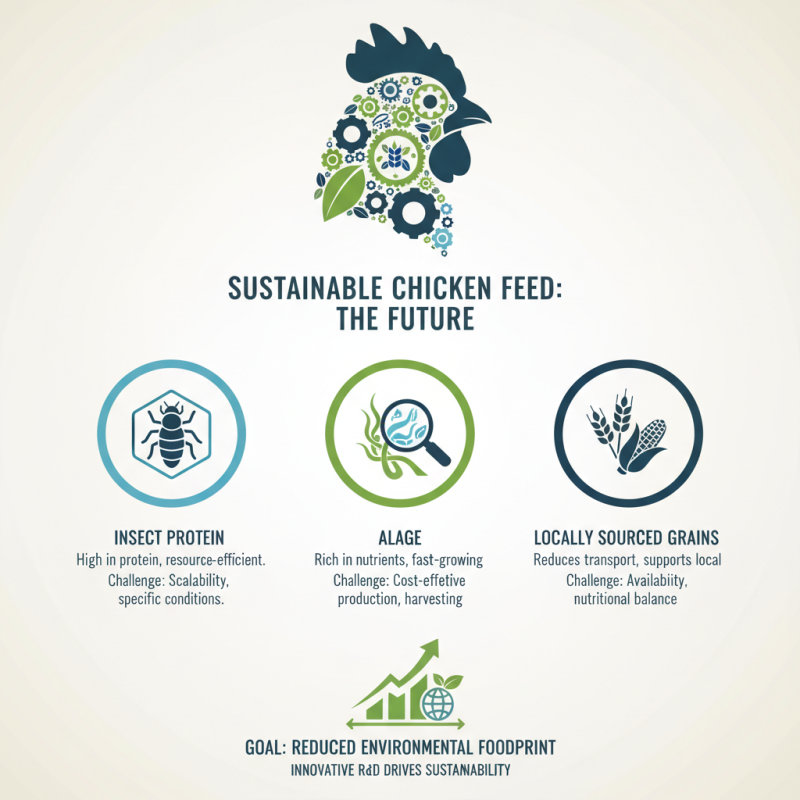
The poultry industry faces a significant challenge: reducing the environmental impact of chicken feed. Traditional feed sources often rely on unsustainable farming practices. These methods contribute heavily to carbon emissions. Transitioning to sustainable alternatives is essential. Using locally sourced grains can lessen transportation emissions. This shift not only benefits the environment but also supports local economies.
Incorporating insects into chicken feed presents another innovative solution. Insect farming has a low carbon footprint. It requires less land and water compared to traditional crops. However, this method is not without its challenges. Regulatory frameworks are still developing, and consumer acceptance varies. Awareness of these issues is critical for progress.
Specific details matter in reducing the carbon footprint. For example, assessing feed production processes can reveal hidden emissions. Investigating supply chains might uncover opportunities for improvement. Continuous research is needed to develop new feed options. It is vital to keep the conversation going while refining these sustainable practices. Each step forward brings us closer to a truly sustainable poultry industry.
Future Directions: Research and Development in Chicken Feed Sustainability
The future of chicken feed sustainability lies in innovative research and development. Scientists are exploring alternative ingredients that can reduce the environmental footprint. These ingredients include insect protein, algae, and locally sourced grains. Each option presents unique challenges and benefits. For instance, insect farming requires specific conditions, which might limit scalability.
Meanwhile, researchers are investigating the nutritional impacts of these new feeds. The goal is to maintain growth rates and egg production while enhancing the birds' health. Just switching ingredients is not always effective. It takes rigorous testing to ensure that chickens receive all essential nutrients. Some methods may fail to meet these standards, prompting a need for further refinement.
Field trials offer valuable insights, yet they often encounter unexpected issues. Changes in flock behavior or feed acceptance can complicate results. Monitoring and adjusting for such variations is crucial. Sustainable practices must also consider cost-effectiveness. Balancing environmental responsibility with economic viability is a complicated task. The journey towards sustainable chicken feed requires ongoing effort and reflection.