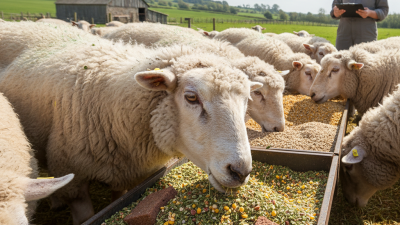
Global livestock production is changing under pressure from population growth, climate risk, feed prices, and stricter quality expectations. For buyers, choosing livestock feed is no longer a simple cost comparison. It involves digestibility, ingredient safety, regional availability, animal performance, and supply reliability.
Alltech’s 2024 Agri-Food Outlook estimated global feed production at approximately 1.13 billion metric tons in 2023. Its survey also showed different trends across poultry, pig, ruminant, and aquaculture markets. The OECD-FAO Agricultural Outlook 2024–2033 expects continued growth in animal-source food demand, especially in emerging economies. These figures provide direction, not certainty. Reporting methods differ between countries. Comparisons can be imperfect.
Dr. Harinder Makkar, a recognized FAO livestock-feed specialist, has emphasized, “Feed is the largest single cost in livestock production.” That reality explains why ingredient selection matters so much. A small change in protein quality can affect feed conversion, manure output, and farm margins. A dusty bag, an unusual odor, or inconsistent pellet size can also signal handling problems. Sometimes, the cheapest product becomes expensive later.
This guide examines the top 10 types of livestock feed for global buyers. It covers forage, compound feed, concentrates, silage, grains, oilseed meals, mineral mixtures, additives, aquaculture feed, and specialty formulations. Each category has practical strengths and limitations. Buyers should verify laboratory results, traceability records, storage conditions, and supplier experience before purchasing. Feed decisions should support animal health, responsible sourcing, and dependable production—not price alone.
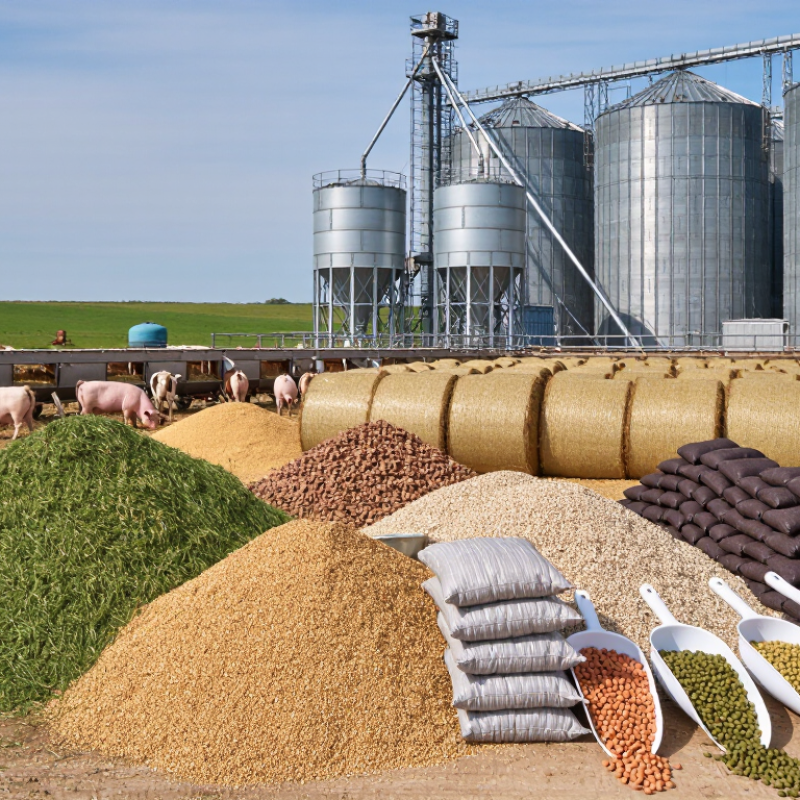
Livestock feed is any processed or natural material given to farm animals for nutrition, growth, maintenance, or production. It may contain energy sources, protein, fiber, minerals, vitamins, and controlled additives. Cattle, poultry, pigs, sheep, and goats require different feeding plans.
The ten common feed types are forage, hay, silage, pasture, grains, oilseed meals, protein concentrates, mineral supplements, vitamin premixes, and complete compound feed. Forage supports rumen health. Grains provide concentrated energy. Oilseed meals help build muscle and support milk or egg production. Mineral supplements can address calcium, phosphorus, salt, or trace-element needs. Complete feed combines several ingredients into a measured ration.
Small details matter.
Global buyers usually assess feed by species, animal age, production stage, moisture, protein content, fiber levels, and shelf life. They also examine testing records, traceability, packaging strength, storage conditions, and transport resilience. A feed that performs well in a dry warehouse may deteriorate quickly in humid coastal conditions. This is an easy risk to underestimate.
The global market includes bulk commodities, specialty nutrition products, organic materials, and locally adapted rations. Prices may shift with grain harvests, freight costs, currency movements, and regional demand. Buyers should verify permitted ingredients and labeling rules in the destination market. Laboratory certificates are useful, but sampling methods can still create uncertainty. No single feed formula suits every farm, climate, or production goal. Local veterinary and animal-nutrition expertise remains important when adjusting rations.
| No. | Feed Type | Definition | Common Livestock | Primary Purpose | Typical Forms | Global Buyer Considerations |
|---|---|---|---|---|---|---|
| 1 | Pasture and Grazing Forage | Living grasses, legumes, and other edible plants consumed directly by grazing animals. | Cattle, sheep, goats, horses | Provides natural fiber, energy, protein, vitamins, and minerals. | Open pasture, managed grassland, rotational grazing | Seasonality, rainfall, stocking density, land availability, forage species, and pesticide controls are important. |
| 2 | Hay | Grass, legume, or mixed forage that is cut, dried, and stored for later feeding. | Cattle, horses, sheep, goats, rabbits | Supplies structural fiber and helps maintain rumen and digestive function. | Small bales, large square bales, round bales, chopped hay | Moisture, leaf retention, maturity at harvest, mold, foreign material, and bale density affect quality and freight cost. |
| 3 | Silage | High-moisture forage preserved through controlled anaerobic fermentation. | Dairy cattle, beef cattle, sheep | Provides conserved energy and fiber when fresh pasture is limited. | Corn silage, grass silage, legume silage, wrapped forage | Dry-matter content, fermentation quality, pH, mycotoxins, oxygen exposure, and storage infrastructure require close control. |
| 4 | Cereal Grains | Grains such as maize, wheat, barley, sorghum, and oats used as energy-rich feed ingredients. | Poultry, pigs, cattle, sheep, goats | Delivers starch and metabolizable energy for growth, maintenance, and production. | Whole grain, cracked grain, rolled grain, ground meal | Price volatility, moisture, test weight, contamination, mycotoxins, and import-grade specifications influence purchasing decisions. |
| 5 | Protein Meals and Oilseed Products | Protein-rich materials, commonly produced after oil extraction from soybeans, rapeseed, sunflower seed, or other oilseeds. | Poultry, pigs, dairy cattle, aquaculture species | Supports muscle development, milk production, egg production, and balanced amino-acid supply. | Meal, cake, granules, pellets | Protein level, amino-acid profile, fiber, residual oil, anti-nutritional factors, traceability, and sustainability documentation matter. |
| 6 | Compound Feed | A formulated mixture of multiple ingredients designed to meet the nutritional needs of a particular animal category. | Poultry, pigs, cattle, sheep, goats, aquaculture species | Provides a consistent, complete, and measurable ration. | Mash, pellets, crumbles, extruded feed | Species, age, production stage, feed conversion targets, pellet durability, storage life, and local regulations should be specified. |
| 7 | Mineral Feed | Feed materials or mixtures supplying essential minerals such as calcium, phosphorus, sodium, magnesium, zinc, and selenium. | All livestock and poultry, according to ration requirements | Supports bones, shell formation, fluid balance, enzyme activity, and reproduction. | Loose powder, granules, blocks, premixes | Correct dosage, mineral bioavailability, homogeneity, heavy-metal limits, and regional deficiency patterns are essential. |
| 8 | Vitamin and Nutrient Premixes | Concentrated blends of vitamins, minerals, amino acids, and other essential nutrients added to a complete ration. | Poultry, pigs, cattle, sheep, goats, aquaculture species | Corrects nutrient gaps and improves consistency of formulated diets. | Powder, micro-granules, liquid concentrates | Accurate inclusion rate, stability, storage temperature, light protection, batch uniformity, and labeling compliance are key. |
| 9 | Agro-Industrial By-Product Feeds | Nutritional co-products from food, grain, sugar, brewing, milling, and oil-processing industries. | Cattle, sheep, goats, pigs, poultry, depending on the material | Adds energy, protein, or fiber while supporting resource efficiency and circular agriculture. | Bran, distillers grains, beet pulp, molasses, citrus pulp, dried residues | Nutrient variability, perishability, contaminants, transport distance, and allowable inclusion rates must be assessed. |
| 10 | Functional Feed Additives | Substances added in small quantities to support feed quality, digestion, animal health, or production performance. | Species-specific use across livestock, poultry, and aquaculture | May support gut function, preservation, feed stability, or targeted nutritional outcomes. | Powder, liquid, coated particles, premix inclusion | Permitted claims, regulatory approval, evidence of efficacy, compatibility, dosage accuracy, and residue requirements vary by market. |