What Is the Best Feed for Cattle in 2026?
Choosing the best feed for cattle in 2026 is not about finding one perfect ingredient. It is about matching nutrition with breed, age, production goals, climate, and available forage. A growing steer needs a different ration from a high-producing dairy cow. A dry winter pasture also changes the calculation.
Dr. Temple Grandin, a leading livestock scientist, often emphasizes, “Cattle are creatures of habit.” That principle matters at the feed bunk. Sudden ration changes can reduce intake, disturb rumen function, and create avoidable health concerns. Consistent feeding times, clean water, fresh forage, and carefully introduced concentrates remain practical foundations. Small details matter. A damp hay bale can smell sour. An empty water trough can quietly reduce performance.
The best feed for cattle may combine pasture, hay, silage, grains, protein sources, minerals, and specialized supplements. The correct balance depends on tested forage and professional ration analysis. Energy, protein, fiber, calcium, phosphorus, and trace minerals must work together. More grain does not automatically mean faster, healthier growth.
This guide examines feed options for cattle in 2026, including precision nutrition, local forage strategies, and changing sustainability expectations. It also questions common assumptions. Some new technologies appear promising, but field results may vary. Even experienced producers can misjudge a ration when forage quality changes. Reliable decisions require observation, records, laboratory testing, and advice from a qualified cattle nutritionist.
Defining the Nutritional Needs of Cattle in 2026
What Is the Best Feed for Cattle in 2026?
Defining the nutritional needs of cattle in 2026 begins with the animal, not the feed label. A mature beef cow, growing heifer, dairy cow, and finishing steer require different energy and protein levels. Forage should remain the foundation when it is clean, digestible, and nutritionally adequate. Hay quality can change sharply between cuttings, even on the same farm. A forage analysis helps reveal crude protein, fiber, minerals, and energy that eyesight cannot measure.
Nutrition planning now requires closer attention to weather and production goals. Drought may reduce pasture energy, while heavy rain can lower hay quality during storage. Cattle also need consistent access to fresh water, salt, and essential minerals. Calcium, phosphorus, magnesium, and trace elements should match the ration and local deficiencies. Over-supplementation is not automatically safer. It can waste money and disturb the diet.
Good feeding decisions combine laboratory results, body-condition scoring, manure observation, and veterinary guidance. A cow with visible ribs may need more energy, but sudden grain increases can harm rumen function. Change rations gradually. Keep feed bunks clean. Check them at the same time each day. Precision tools may improve monitoring, yet they cannot replace practical observation. I have seen feeding plans fail because they looked efficient on paper but ignored muddy lots, spoiled hay, or timid animals pushed away from the bunk. The best 2026 ration is therefore evidence-based, adaptable, and realistic for the cattle and the farm.
What Is the Best Feed for Cattle in 2026? – Defining the Nutritional Needs of Cattle in 2026
| Feed or Feed Class |
Typical Dry Matter (%) |
Crude Protein (% of DM) |
Energy / TDN (% of DM) |
Fiber / NDF (% of DM) |
Best Use in a Cattle Diet |
| High-quality pasture grass |
20–30 |
14–22 |
58–68 |
45–60 |
Foundation forage for grazing beef cattle and moderate-producing dairy cattle when plant maturity is controlled. |
| Legume forage, such as alfalfa or clover |
20–30 |
16–24 |
55–65 |
35–50 |
Useful for growing cattle, lactating cows, and diets requiring more protein and calcium. |
| Grass hay |
85–90 |
7–14 |
48–58 |
55–70 |
Reliable roughage for maintenance diets, winter feeding, and cow-calf systems. |
| Legume hay |
85–92 |
15–22 |
52–62 |
38–52 |
Protein-dense forage for calves, replacement heifers, lactating cows, and high-demand periods. |
| Corn silage |
30–38 |
7–9 |
68–75 |
38–48 |
Energy-rich forage for dairy and beef finishing diets; protein and minerals usually require balancing. |
| Small-grain silage |
30–40 |
8–14 |
55–68 |
45–60 |
Flexible forage option that can provide moderate energy and fiber when harvested at the correct stage. |
| Corn grain |
85–90 |
8–10 |
88–92 |
8–12 |
Concentrated starch and energy source for finishing cattle and high-producing dairy cows; introduce gradually. |
| Barley grain |
85–90 |
10–13 |
80–88 |
18–25 |
Rapidly fermentable energy source; careful processing and ration management help reduce acidosis risk. |
| Soybean meal |
88–91 |
44–49 |
75–85 |
10–18 |
High-quality protein supplement for young stock and milk production when forage protein is insufficient. |
| Mineral and vitamin supplement |
Variable |
Not the primary measure |
Not the primary measure |
Not the primary measure |
Supports calcium, phosphorus, salt, trace minerals, and vitamins; inclusion should follow forage analysis and local recommendations. |
Practical conclusion: There is no single best feed for every animal. In 2026, the most effective cattle ration should be based on the animal's production stage, forage analysis, available feed quality, water access, mineral balance, and gradual diet changes. The values above are typical ranges on a dry-matter basis and should be verified with laboratory testing before ration formulation.
Comparing Pasture, Hay, Silage, and Other Forage Options
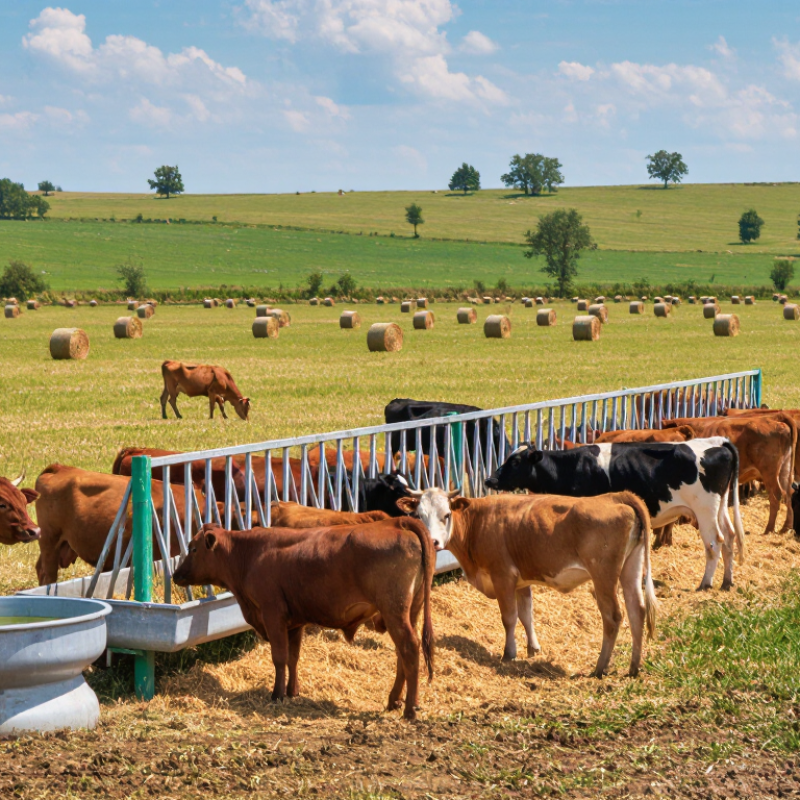
The best cattle feed in 2026 depends on climate, herd purpose, soil, and forage quality. Fresh pasture can provide protein, energy, and natural exercise when growth is steady. Rotational grazing helps protect plant roots and reduces bare ground. However, pasture quality can fall quickly during drought or late season growth.
Hay remains practical for winter feeding and remote fields. Good hay should smell fresh, feel flexible, and contain minimal dust or mold. Silage offers consistent nutrients and can preserve forage when harvested at the right moisture. It needs careful storage because air exposure can cause heating and spoilage. Legume forage, mixed grass, browse, and safe crop residues can add variety. A feed analysis is more reliable than appearance alone. Nutrient levels vary widely between fields and harvest dates. I have seen attractive hay fail to support body condition. That is an uncomfortable reminder: judgment needs testing.
Tips: Match feed to animal needs. Growing calves, mature cows, and lactating animals require different energy levels. Check body condition every two weeks. Introduce silage or new forage gradually. Keep clean water available. Ask a qualified livestock nutritionist to review laboratory results, especially before winter or calving. Small mistakes become expensive quickly.
What Is the Best Feed for Cattle in 2026?
Comparing pasture, hay, silage, and other forage options using typical nutrient values on a dry-matter basis.
Pasture and legume hay generally provide more crude protein, while corn silage typically supplies the highest energy level measured as total digestible nutrients. Grass hay offers dependable fiber and storage stability. Actual feed quality varies with plant maturity, weather, harvest timing, storage, and laboratory analysis, so forage testing should guide ration decisions.
Typical reference values compiled from common U.S. forage-analysis ranges; percentages are shown on a dry-matter basis.
Evaluating Grains, Protein Sources, Minerals, and Supplements
Choosing the best cattle feed in 2026 starts with the forage already available. Hay, pasture, silage, and crop residues differ sharply in energy, fiber, and moisture. A forage test is more reliable than judging hay by color alone. Cattle need effective fiber to support chewing and stable rumen function. Too much grain can cause acidosis, loose manure, and reduced appetite.
Corn and other energy-rich grains can support growth, milk production, or body condition. They should be introduced gradually and matched to the animal’s stage and workload. Barley may ferment quickly, while other grains may provide a steadier energy supply. Protein sources, including oilseed meals, legume forage, and approved co-products, help rumen microbes use fiber. Protein is not automatically better. Excess protein can raise feed costs and increase nitrogen losses.
Mineral programs deserve close attention. Salt, calcium, phosphorus, magnesium, and trace minerals must reflect forage results, soil conditions, and local deficiencies. Free-choice minerals are useful, but intake can be uneven. Some cattle eat too much; others barely touch them. Supplements may add fat, yeast cultures, or specific vitamins, but their value depends on a real nutritional gap. I have seen feeding plans fail because the ration looked excellent on paper, yet cattle sorted the mix. Observe manure, cud chewing, body condition, and water intake weekly. Adjust slowly, record the response, and question any formula that ignores individual animals.
Matching Feed Choices to Cattle Type, Age, and Production Goals
The best cattle feed in 2026 is not one product for every herd. It is a ration matched to cattle type, age, and production goals. A growing calf needs digestible energy, quality protein, minerals, and steady access to clean water. Forage should remain the foundation when it is clean, nutritious, and properly stored. Test it before buying supplements. Appearance alone can mislead.
Dairy cows producing heavily may require more energy and rumen-available protein than dry cows. Their ration must support milk yield without encouraging excessive weight loss or digestive upset. Beef cattle nearing market need efficient energy intake, but rapid changes can reduce feed consumption and harm rumen function. Breeding cows often need a moderate diet that protects body condition before calving. Too much feed can create another problem.
Watch the animals closely.
Body condition, manure texture, chewing activity, and daily intake provide useful evidence. A nutrition professional can balance forage analysis with production records, especially when weather changes pasture quality. Calves also need gradual feed transitions and enough space at the trough. Crowding can quietly reduce growth in smaller animals.
No ration works perfectly on paper. Individual animals vary, and feed analysis has limits. I would not change a complete program after one poor feeding day. Review trends for several weeks, then adjust one factor at a time. Sometimes the cheapest feed becomes expensive when growth, fertility, or health declines.